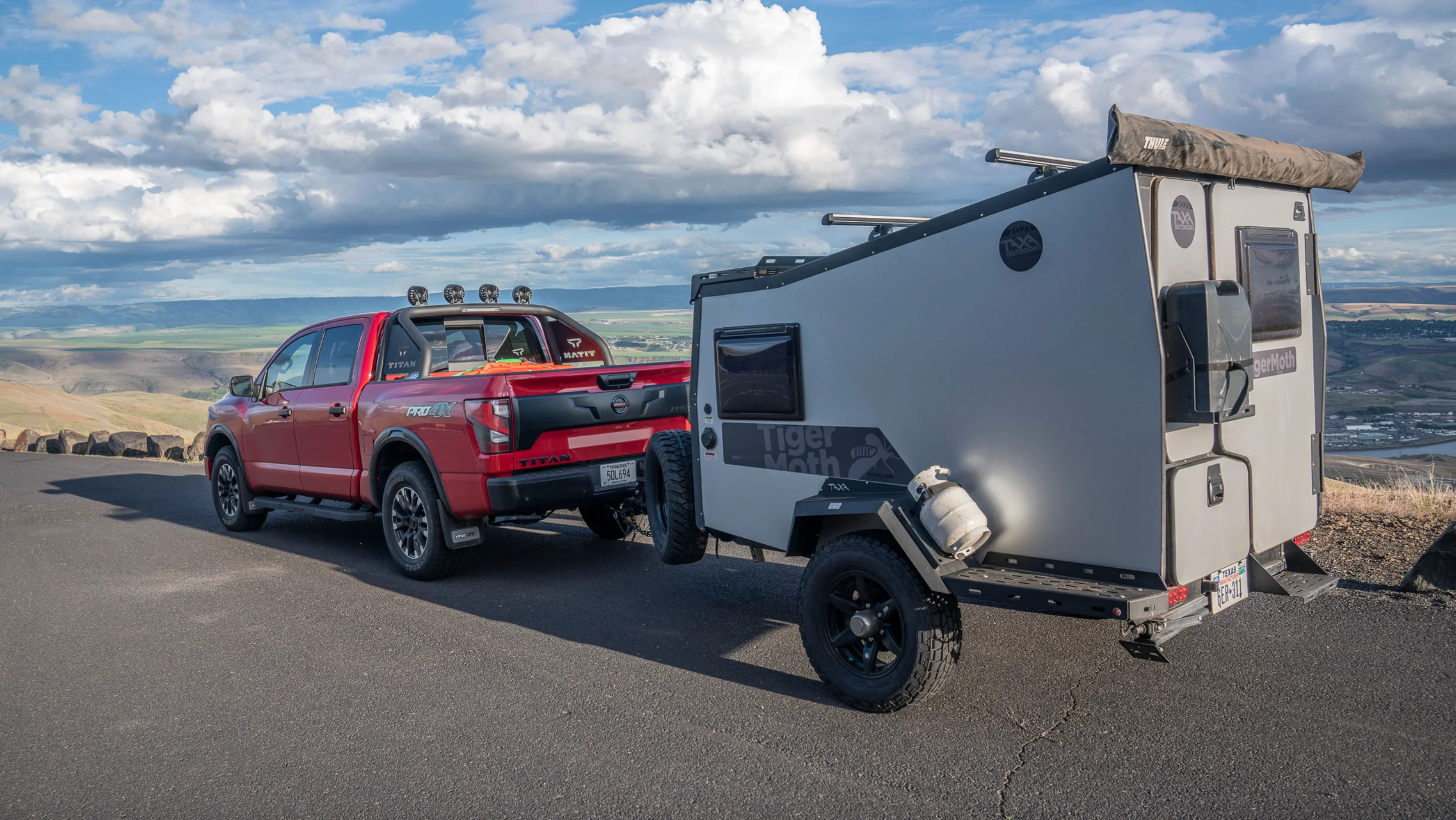
Tongue Weight Explained - How to Measure and Adjust It
Tongue weight is the single most important number for towing safety. Get it wrong and your trailer sways, your truck handles poorly and highway driving becomes white-knuckle work.
What Is Tongue Weight?
Tongue weight is the downward force the trailer coupler puts on your truck’s hitch ball. It’s determined by how cargo is distributed inside the trailer relative to the axle position.
Target range: 10-15% of total loaded trailer weight.
A 6,000 lb loaded trailer should put 600-900 lbs on the hitch. That’s the sweet spot where the trailer tracks straight and the truck handles normally.
Why It Matters
Too Light (Under 10%)
The trailer is tail-heavy. The rear of the trailer pushes down, the tongue lifts up and the trailer wants to swing side to side. This is the main cause of trailer sway — and sway causes rollovers.
Too Heavy (Over 15%)
The tongue pushes down too hard on the truck’s rear axle. The rear squats, the front lifts, steering gets light and braking distance increases. You’re also overloading the truck’s payload capacity.
Just Right (10-15%)
The trailer tracks straight behind the truck. Steering feels normal. The truck sits level. Wind gusts and passing semi-trucks don’t cause sway.
How to Measure
Method 1: Tongue Weight Scale
A dedicated tongue weight scale costs $30-80. Place it on level ground under the coupler jack. Lower the coupler onto the scale. Read the weight.
Make sure the trailer is level when measuring — an angled trailer gives inaccurate readings.
Method 2: Bathroom Scale (Light Trailers)
For trailers under 500 lbs tongue weight, a bathroom scale works. Place a pipe vertically on the scale, set a board across the pipe at coupler height, and rest the coupler on the board. Read the scale.
Method 3: CAT Scale
The most accurate method. Weigh the truck with trailer hitched. Then weigh the truck with the trailer unhitched but tongue resting on its jack. The difference is tongue weight.
Cost: $12-15 at any truck stop.
Adjusting Tongue Weight
Too Light — Move Weight Forward
- Shift heavy items (water tanks, batteries, tools) ahead of the trailer axles
- Load the front storage compartments first
- Move the propane tanks forward if possible
- Add cargo to the A-frame or front tongue area
Too Heavy — Move Weight Rearward
- Shift heavy items behind the axles (but not too far back)
- Distribute weight more evenly between front and rear
- Check if the water tank is full — fresh water weighs 8.3 lbs per gallon
Axle Position
Some trailers allow axle repositioning. Moving axles rearward increases tongue weight. Moving them forward decreases it. This is a permanent fix for trailers with chronic tongue weight issues.
Loading Tips
Heavy items go low and centered between the walls, over or just ahead of the axles.
Never load all heavy items at the rear. This is the most common mistake. A trailer loaded tail-heavy is a towing accident waiting to happen.
Redistribute after every trip. You pack differently each time. Check tongue weight before heading out, especially for long highway drives.
Water tank location matters. If your fresh tank is behind the axles, filling it shifts weight rearward. Know where your tank sits and factor it into loading plans.
Related Articles
More Camper Guides
How to Level a Travel Trailer at Your Campsite
Level your travel trailer quickly using leveling blocks, stabilizer jacks and a bubble level. Step-by-step process for side-to-side and front-to-back leveling.
Trailer Weight Chart - GVWR, Tow Capacity and Hitch Sizes
Trailer weight chart with GVWR for every type. Look up tow capacity by VIN, pick the right hitch class and calculate real-world towing weight.
Weight Distribution Hitch Guide - Setup, Adjustment and Brands
Set up a weight distribution hitch correctly for safe towing. Covers how WDH works, when you need one, proper adjustment, spring bar tension and top brands compared.
Best Trucks for Towing a Travel Trailer in 2026
Compare the best towing trucks by capacity, payload and real-world performance. Half-ton, 3/4-ton and diesel rankings for pulling travel trailers and fifth wheels.