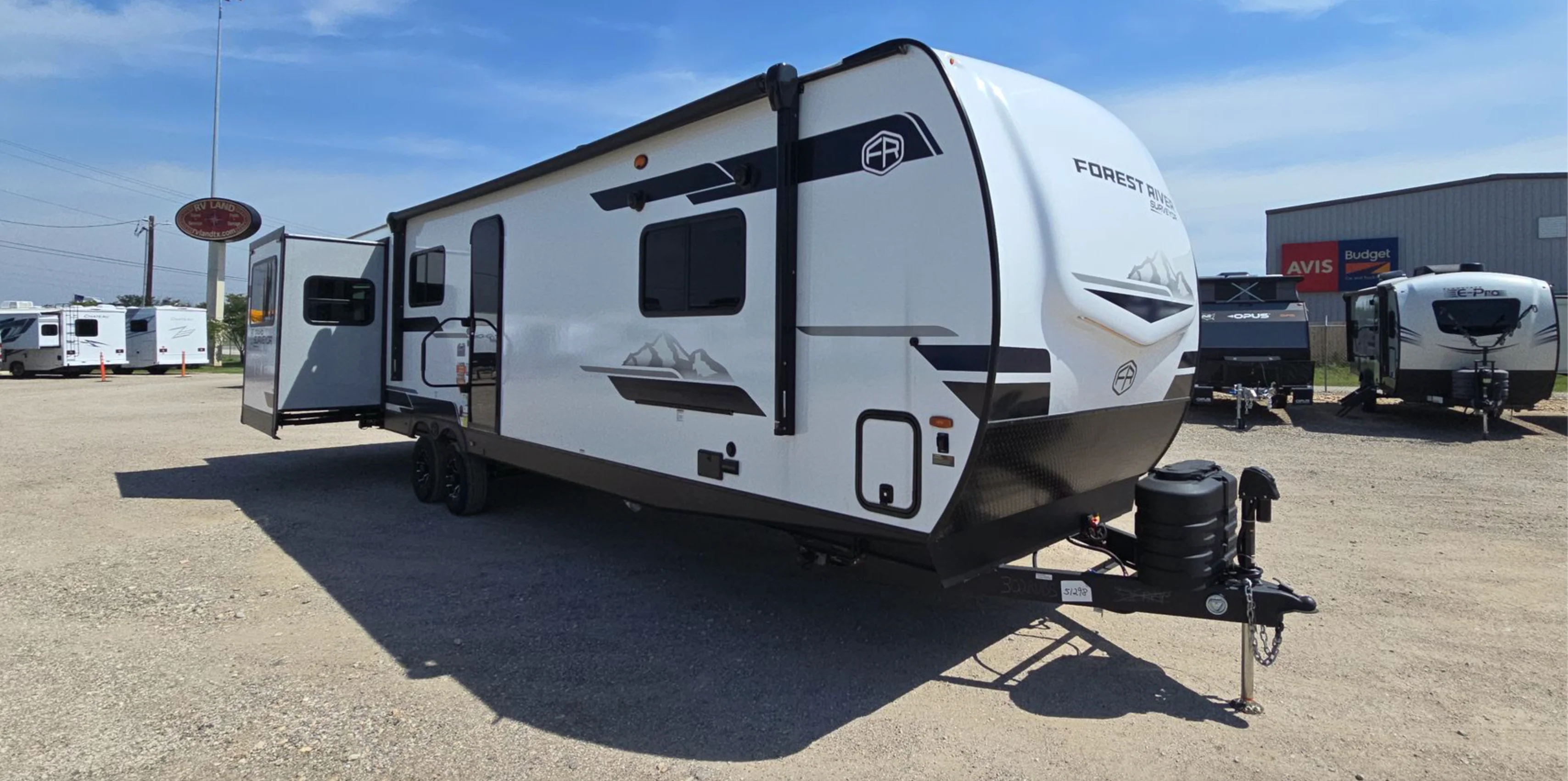
How to Level a Travel Trailer at Your Campsite
A trailer that’s off-level makes the fridge work poorly, doors swing on their own and sleep feel like you’re on a hillside. Absorption fridges can actually be damaged running off-level for extended periods.
Leveling takes 10 minutes with the right gear.
What You Need
- Bubble level (or a leveling app on your phone)
- Leveling blocks (Andersen, Lynx or stackable plastic blocks)
- Wheel chocks
- Your tongue jack and stabilizer jacks (already on the trailer)
Step 1: Pick Your Spot
Before unhitching, pull into the campsite and assess the grade. Most sites slope for drainage. Position the trailer so the low side needs the least correction — fewer blocks, more stable.
Step 2: Level Side-to-Side First
Place your bubble level on the floor or a countertop running side-to-side.
If the trailer leans:
- Place leveling blocks on the low side of the trailer
- Pull forward slowly until the low-side tires drive up onto the blocks
- Check the bubble level again
- Add or remove blocks until level
Andersen Levelers: Drive onto the ramp until the level indicator shows level. The tire locks into a notch so you can’t roll off.
Stackable blocks: Stack to the needed height, drive up and chock the wheels on both sides.
Step 3: Chock the Wheels
Once side-to-side is level, chock all wheels. Place chocks on both the front and back of at least one tire on each side. The trailer must not roll.
Step 4: Level Front-to-Back
Unhitch from the tow vehicle. Use the tongue jack to raise or lower the front until the front-to-back bubble reads level.
Electric tongue jacks make this easy — one button. Manual jacks work fine but take more effort.
Step 5: Deploy Stabilizer Jacks
Lower the stabilizer jacks at all four corners until they contact the ground firmly.
Critical rule: Stabilizer jacks stabilize — they don’t level or lift. Don’t crank them until they lift the trailer off the ground. That puts stress on the frame and can bend the jacks.
Just snug them against the ground to prevent rocking when you walk around inside.
Stabilizer Jack Pads
Place pads under the jack feet. They distribute weight and prevent the jacks from sinking into soft ground. Purpose-built pads, small plywood squares or even plastic cutting boards work.
Step 6: Final Check
Walk inside. Place the level on the floor in the center of the trailer. Check both directions. Make small adjustments with the tongue jack if needed.
Open the fridge and make sure the door doesn’t swing. Stand in the shower — water should drain evenly, not pool on one side.
Leveling on Slopes
Steep sites require more blocks. If you need more than 4 inches of correction, consider finding a different spot. Excessive stacking is unstable.
For front-to-back slopes, the tongue jack has limited travel. If you can’t get level with the jack fully extended or retracted, reposition the trailer on the site.
Auto-Leveling Systems
Higher-end trailers and fifth wheels have automatic leveling systems. Press a button and hydraulic jacks level the trailer automatically.
Brands: Lippert Ground Control, HWH, Equalizer Systems
Aftermarket auto-leveling kits cost $1,500-$3,000 installed. Worth it if you move campsites frequently or have mobility issues.
Tips for Texas Campgrounds
Texas clay soil expands when wet and contracts when dry. After rain, check your leveling — the ground may shift. Use larger jack pads on clay to prevent sinking.
Summer heat softens asphalt pads. Place boards under leveling blocks and stabilizer jacks on asphalt sites to prevent them from pressing into the surface.
Related Articles
More Camper Guides
Weight Distribution Hitch Guide - Setup, Adjustment and Brands
Set up a weight distribution hitch correctly for safe towing. Covers how WDH works, when you need one, proper adjustment, spring bar tension and top brands compared.
Best Trucks for Towing a Travel Trailer in 2026
Compare the best towing trucks by capacity, payload and real-world performance. Half-ton, 3/4-ton and diesel rankings for pulling travel trailers and fifth wheels.
Tongue Weight Explained - How to Measure and Adjust It
Understand tongue weight and why it matters for safe towing. How to measure with a scale, calculate the right percentage and fix tongue-heavy or tongue-light trailers.
Trailer Weight Chart - GVWR, Tow Capacity and Hitch Sizes
Trailer weight chart with GVWR for every type. Look up tow capacity by VIN, pick the right hitch class and calculate real-world towing weight.