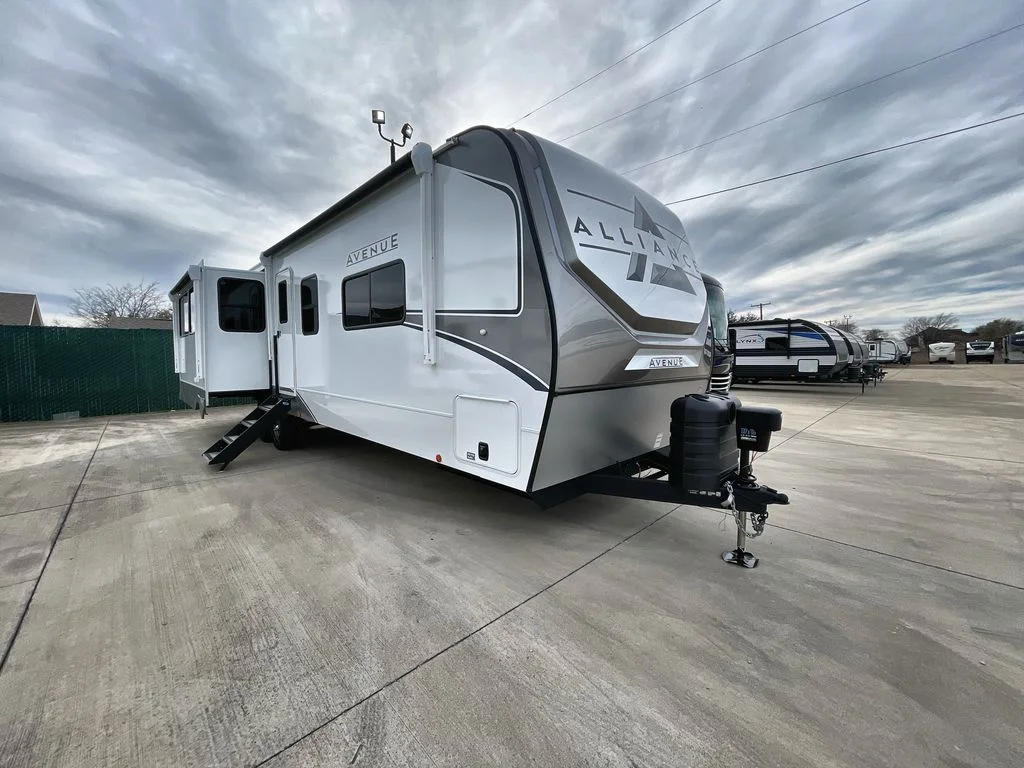
Used RV Buying Guide — What to Check Before You Sign
A used RV saves 30-50% over new. But it can also be a money pit that smells like mildew and leaks from every seam. The difference between a great deal and a disaster comes down to knowing what to check.
Before You Look — Set Your Budget
Total Cost, Not Just the Sticker
The purchase price is the starting point. Budget for these on top:
| Expense | Typical Cost |
|---|---|
| Pre-purchase inspection | $300-600 |
| Sales tax (varies by state) | 6-8% of price |
| Title and registration | $75-200 |
| Insurance (annual) | $500-1,500 |
| Immediate repairs | $500-2,000 |
| New tires (if needed) | $400-1,200 |
| New batteries | $100-400 |
A $20,000 travel trailer costs $22,000-25,000 by the time you’re camping in it. Factor that in.
Depreciation Curve
RVs lose value fast in the first 3 years, then flatten out.
| Age | Typical Value vs MSRP |
|---|---|
| 1 year | 70-80% |
| 3 years | 55-65% |
| 5 years | 40-55% |
| 7 years | 30-45% |
| 10+ years | 20-35% |
The sweet spot for value is 3-5 years old. Most of the depreciation hit has happened, but the RV still has modern features and hasn’t had time to develop serious problems from age and neglect.
The Inspection — What to Check
Print this list and bring it with you. Check every item.
1. Roof (Most Important)
The roof is where 80% of RV problems start. Water gets in through failed sealant around vents, AC units, antennas and edge trim.
What to do: Climb up there. Walk the entire roof. Look for:
- Cracked or peeling sealant around every penetration
- Soft spots (press firmly — the decking should feel solid)
- Standing water or staining (indicates low spots that pond)
- Tears, bubbles or lifted seams in the membrane
Roof repairs range from $200 (reseal) to $5,000+ (full replacement). Know what you’re getting into.
2. Water Damage Inside
Water damage hides. It can rot the wood framing behind walls for years before you see it on the surface.
Check these spots:
- Ceiling corners in every room
- Around every window frame (inside)
- Under the dinette seats
- Inside cabinets on exterior walls
- Carpet edges near slide-outs
- Behind the toilet (pull the trim if possible)
- Inside the cab-over bunk area (Class C)
Use a moisture meter. Press it against walls, floors and ceilings around windows and penetrations. Readings over 15-20% indicate moisture intrusion. This $30 tool is the single best investment for buying a used RV.
Smell matters. If you smell mildew or mustiness anywhere, there’s water damage. Period. The seller will say they “just need to air it out.” They don’t. There’s rot behind that wall.
3. Slide-Outs
Extend every slide fully. Then check:
- Seals: Run your hand along all four edges. Seals should be pliable and make consistent contact. Cracked, hardened or missing seals let water pour in
- Floor alignment: Walk the floor where the slide meets the main floor. Gaps, lips or soft spots indicate frame issues
- Motor operation: The slide should extend and retract smoothly without grinding, popping or hesitation. Jerky movement means worn gears or a failing motor ($800-2,000 to replace)
4. Exterior Walls
Delamination check: Press firmly on the fiberglass sidewalls in multiple spots. Solid fiberglass feels hard and rigid. If any area feels spongy, springy or makes a hollow sound, water has gotten between the fiberglass and the wood framing. The fiberglass is separating from the substrate.
Delamination repair is usually not worth it. On a $20,000 trailer, delamination means walk away.
5. Tires
Check the DOT date code on the sidewall. It’s a 4-digit number — the first two digits are the week, the last two are the year. “2319” means week 23 of 2019.
Replace tires older than 5-6 years regardless of tread depth. RV tires sit more than they roll, and UV exposure degrades the rubber. Old tires blow out at highway speed. A blowout on a travel trailer shreds the fender, tears off wiring and can rip the underbelly wide open.
Budget $400-1,200 for a full set depending on tire size.
6. Plumbing
Turn on the water pump. Run every faucet hot and cold. Flush the toilet. Check under every sink for drips. Look at the water heater compartment for corrosion or mineral buildup.
Ask the seller to fill the fresh tank before you arrive. If they won’t, that’s a red flag — they know the plumbing leaks.
7. Appliances
Test everything that runs on propane and electric:
- Refrigerator: Turn it on. After 30 minutes, the freezer compartment should feel cool. RV refrigerators (absorption type) are expensive to replace — $1,200-2,500
- Water heater: Light it on propane. Wait 15 minutes and check for hot water at a faucet
- Furnace: Turn it on. Should blow warm air within 2-3 minutes with no unusual smells
- AC: Run it for 10 minutes. It should cool the interior noticeably. Listen for grinding or rattling from the compressor
- Stove/Oven: Light every burner. Check the oven
8. Electrical
- Check the converter (charges the battery from shore power). Plug into 30-amp and verify the converter charges the battery
- Test every outlet with a plug-in tester
- Check the battery — a 3+ year old battery with low voltage under load needs replacement
- Inspect the breaker panel. Tripped breakers or burn marks mean electrical issues
- Test all lights inside and out
9. Frame and Undercarriage
Travel trailers: Crawl underneath. Look for rust on the frame, especially at weld joints and near the axle mounts. Surface rust is normal on steel frames. Flaking rust that you can poke through with a screwdriver is structural.
Motorhomes: Check for fluid leaks under the engine and transmission. Dark spots on the pavement where it’s been sitting tell you something’s dripping.
10. Brakes
Electric brakes (travel trailers): Have the seller connect to a tow vehicle with a brake controller. Test the brakes at low speed. They should engage smoothly without grabbing or pulling to one side.
Brake drums: Pull a wheel if possible. Worn brake shoes and scored drums cost $150-300 per axle to fix — not a deal-breaker, but a negotiation point.
Red Flags — Walk Away If…
- Musty smell inside. Water damage is present. Always.
- Seller won’t let you climb on the roof. They know it’s bad.
- “I’ve never used the water system.” They’ve never tested it. Or they know it leaks.
- Sidewall delamination anywhere. Structural compromise that’s not worth repairing.
- Rust-through on the frame. Welding repairs on a trailer frame are sketchy. Find a better one.
- Multiple insurance claims in the vehicle history. Could mean accident damage or flood history. Run the VIN.
- No title in hand. If they can’t produce the title at closing, don’t hand over money. Title issues on RVs are a nightmare — liens, salvage history and theft all surface after you’ve paid.
Negotiating the Price
Research First
Check sold prices (not asking prices) on:
- NADA Guides — industry standard for RV valuation
- RVTrader — filter by sold listings in your area
- Facebook Marketplace — search completed sales for your model
The difference between asking price and selling price on a used RV is typically 10-20%. Sellers expect negotiation.
Negotiation Points
Every item on your inspection checklist that needs work is a negotiation tool:
| Issue Found | Typical Cost | Negotiation Leverage |
|---|---|---|
| Needs new tires | $400-1,200 | Strong |
| Roof needs reseal | $200-500 | Moderate |
| AC not cooling | $800-1,500 | Strong |
| Fridge not working | $1,200-2,500 | Very strong |
| Brake pads worn | $150-300/axle | Moderate |
| Dead batteries | $100-400 | Weak (but add it up) |
| Cosmetic damage | Varies | Moderate |
Add up every needed repair and subtract it from the asking price. Most sellers accept if your deductions are reasonable and documented.
Where to Buy
Private Sale
Lowest prices. Negotiate directly. No dealer markup. But no warranty, no financing (usually) and you handle the title transfer yourself. Facebook Marketplace and RVTrader are the best platforms.
Dealership
Higher prices (15-25% markup over private sale) but sometimes offer financing, trade-in credit and short-term warranties. Good option if you need financing. Bad option if you’re paying cash — you’re overpaying for convenience.
Consignment Lots
The seller drops the RV at a lot and the lot handles showings and paperwork. Pricing falls between private and dealer. The lot takes a percentage, so the seller nets less and the buyer sometimes pays more.
Auctions
Online auctions (like ACV or IAAI) sell dealer trade-ins and repo units. Prices can be 20-40% below retail but you often can’t inspect thoroughly before bidding. High risk, high reward.
Related Guides
More Camper Guides
Class C RV Guide - Best Models, Layouts and What to Know
Class C motorhome buying guide with top models compared, floor plan layouts, pricing and four-season options. What to look for before buying a Class C RV.
Best RV Air Conditioner - Top Units Compared for 2026
Compare the best RV air conditioners by BTU, noise level, weight and efficiency. Reviews of Dometic, Coleman-Mach and Furrion units plus sizing and installation tips.
Best Travel Trailers Under 5,000 lbs for Half-Ton Trucks
Top travel trailers under 5,000 lbs that any half-ton truck can tow. Comparing floorplans, build quality, features and real-world weights for couples and small families.
Truck Camper vs Travel Trailer - Which Is Right for You?
Compare truck campers and travel trailers side by side. Pros, cons, costs, towing differences, living space and which type fits your camping style in Texas.